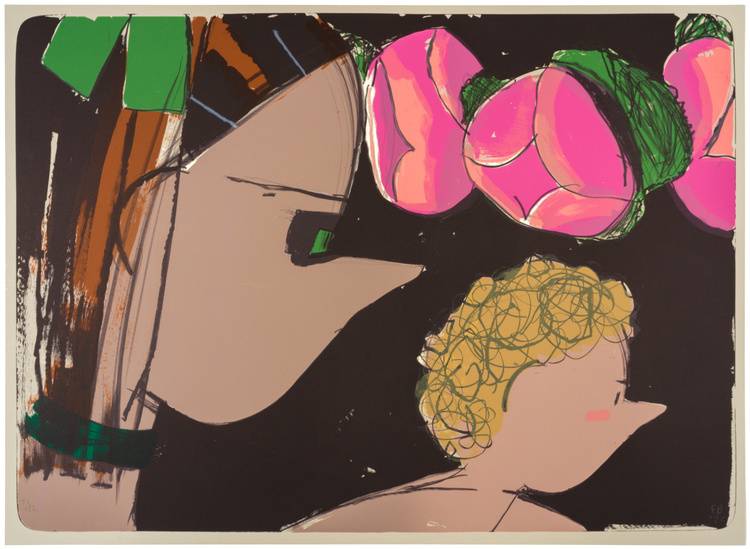
States of Being: recent works from Tamarind Institute
- When
- Friday, November 6, 202612:00 PM – 5:00 PM CSTAdd to calendarGoogle Calendar
- Where
- Fort Worth Contemporary Arts Gallery3050 Waits Ave, Fort Worth, TX 76109Open in Maps
- Hosted by
- Art
Reminders arrive as notifications from the NextToU iPhone app. Get the app
About
The Art Galleries at TCU present States of Being: recent works from Tamarind Institute, a group exhibition featuring prints made between 2013 and 2025 by contemporary artists in collaboration with Master Printers at Tamarind Institute at the University of New Mexico Albuquerque. States of Being is on view at Fort Worth Contemporary Arts, 3050 Waits Avenue, from October 16 to November 14, 2026, the exhibition opens with a reception on Friday, October 16, 6-8 pm.
“Prints layer information, embodying traces of past thought and acts; they are metaphors for the way in which memory traces impose themselves on all perceptions and thought.” Art historian and curator Richard S. Field, Sentences on printed art, 1994.
The selection of 31 works from 15 artists showcases a range of lithographic techniques to embody broad themes and compositions that draw attention both to intimate details and idiosyncrasies and to grand scales of color and form. Some works welcome personal consideration whereas others gesture more broadly to social and cultural structures. Works selected for States of Being probe the quality of layered traces—such as the way limestone remembers mark making, layers of ink on paper that make an image and the ideas conveyed within the objects themselves—as a way to understand the transfer of information and representations of lived experiences.
Representations of the body are more direct in some works such as Robert Pruitt, Jarvis Boyland, Lucy Fradkin and Ellen Berkenbilt. While alluding to a portrait tradition where the subject is able to simply be observed, the artists prioritize the interiority of these figures to express a complicated, opaque inner state. Other works made by Sonya Clark, Nick Cave, Harmony Hammond and Maja Ruznic use abstraction of familiar textures, colors, and shapes to reference the body.
The transfer of information is of concern to Brian Rea, Jeffrey Gibson, José Antonio Suárez Londoño and Ellen Lesperance. Rea uses humor to acknowledge the persistent anxieties felt during the COVID-19 pandemic and into subsequent years. Gibson’s piece reads as a patchwork quilt that is simultaneously clairvoyant, historical, and rooted in the present. The physicality of the mark making, obscured scratchy words like “power,” “real,” and “need you,” and loud symbols like a heart and star are evidence of an attempt to make permanent. In contrast, Lesperance’s carefully organized compositions use archival photographs of protests to visually reconstruct the garments worn by the feminist activists in the photographs. Like snippets from a surrealist dream, Suárez Londoño’s suite of eight prints sport fragmented scenes and Spanish and English text processed through exploratory mark making, and pattern.